
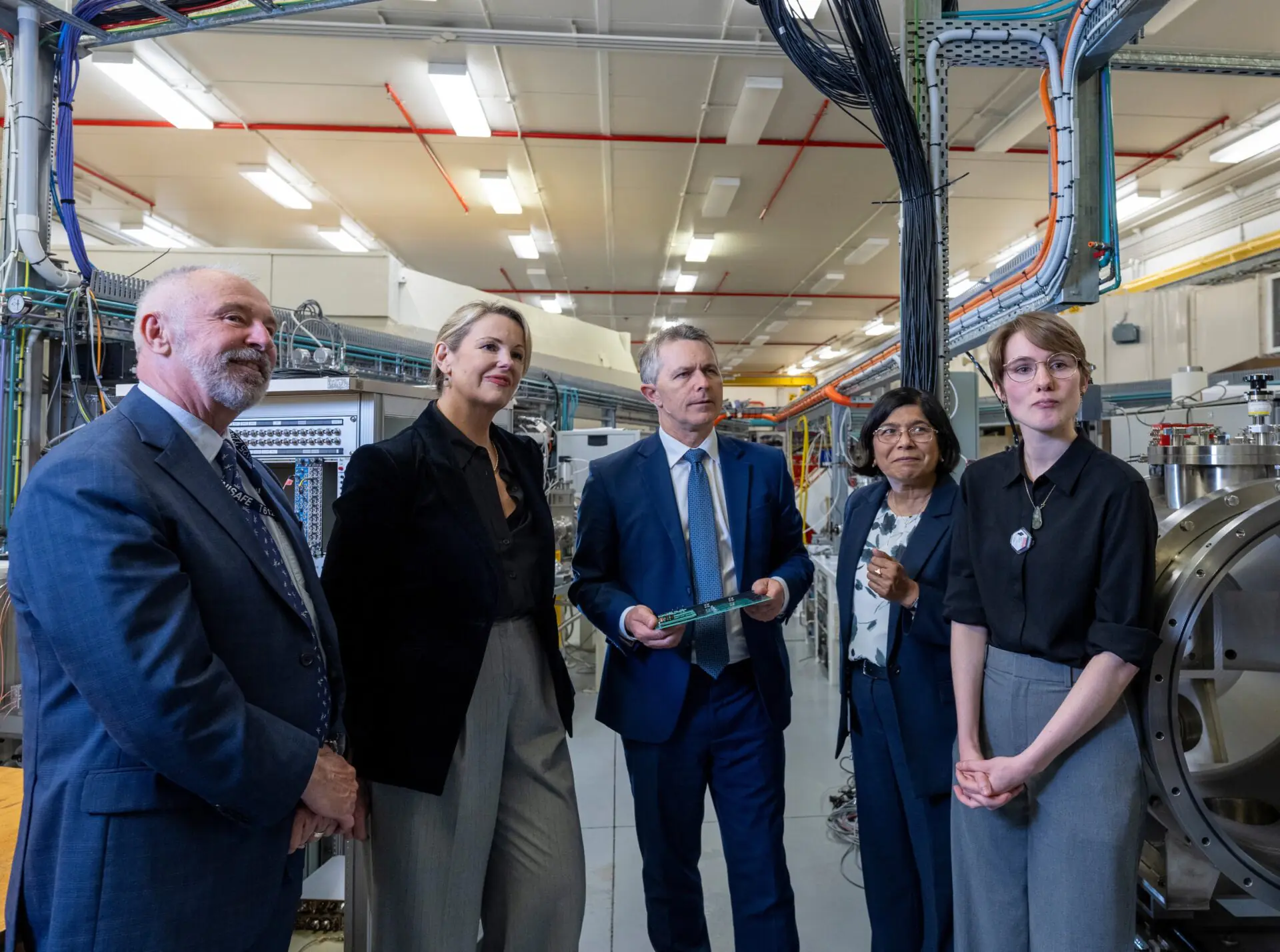
The Minister for Education, Hon Jason Clare MP, together with Alicia Payne MP, visited our Canberra-based node, the Heavy Ion Accelerator Facility (HIAF), where they were welcomed by The Australian National University leadership, Chancellor Dr Gordon de Brouwer and Interim Vice-Chancellor and President Professor Rebekah Brown.
These accelerator capabilities are funded by the Department of Education’s National Collaborative Research Infrastructure Strategy (NCRIS) and the host institution, ANU.
The purpose of the visit was to showcase the impact of HIAF on education, research translation and industry, and to meet the people behind the NCRIS-funded infrastructure that supports research, industry and education across Australia.
We thank ANU Research School of Physics Director Professor Jodie Bradby, along with the staff and students who spoke with the Minister about their research in fundamental nuclear physics, advanced materials and environmental sciences.
The Minister also heard from early career researchers whose studies and professional journeys have been shaped by access to Australia’s national research infrastructure.
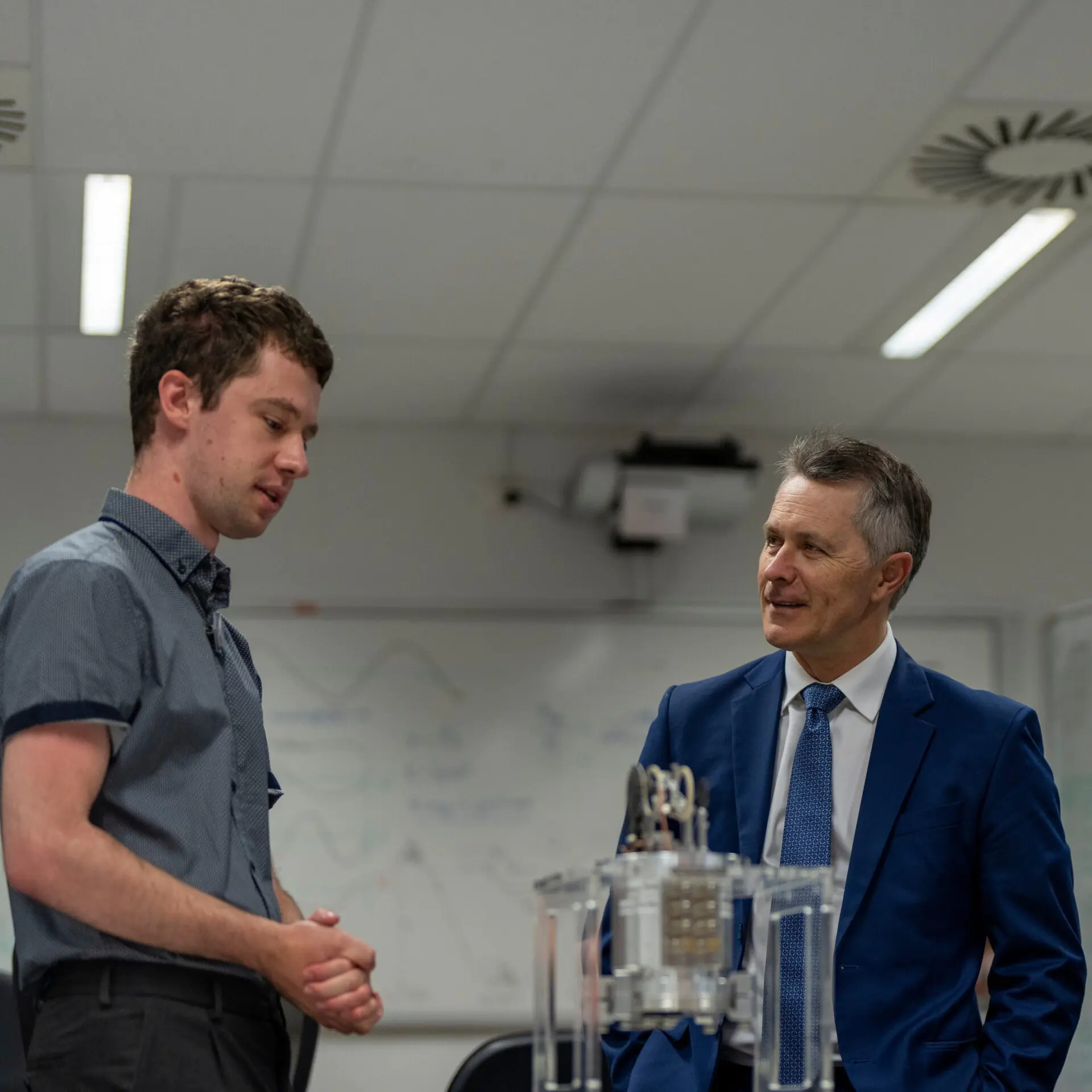
Jack Woodside, a PhD candidate in the Department of Nuclear Physics and Accelerator Applications, spoke about how hands-on experience at HIAF during an undergraduate advanced laboratory course inspired him to pursue Honours and then a PhD in nuclear physics.
The opportunity to work directly with world-class accelerator facilities helped shape his decision to continue his studies and research in the field.
Misty Lakelin shared a different pathway. Growing up on a farm in Western Australia’s Margaret River region and being the first in her family to attend university, she chose ANU because of its reputation for physics and the opportunity to gain practical experience as an undergraduate student. Through the Bachelor of Philosophy program, she worked alongside leading nuclear physicists and gained access to hands-on research opportunities at HIAF that are not available anywhere else in Australia.
After graduating, Misty joined the HIAF team in an NCRIS-funded role as Heavy Ion Radiation Effects Specialist, where she now supports researchers and industry users conducting testing on the Space Irradiation Beamline.
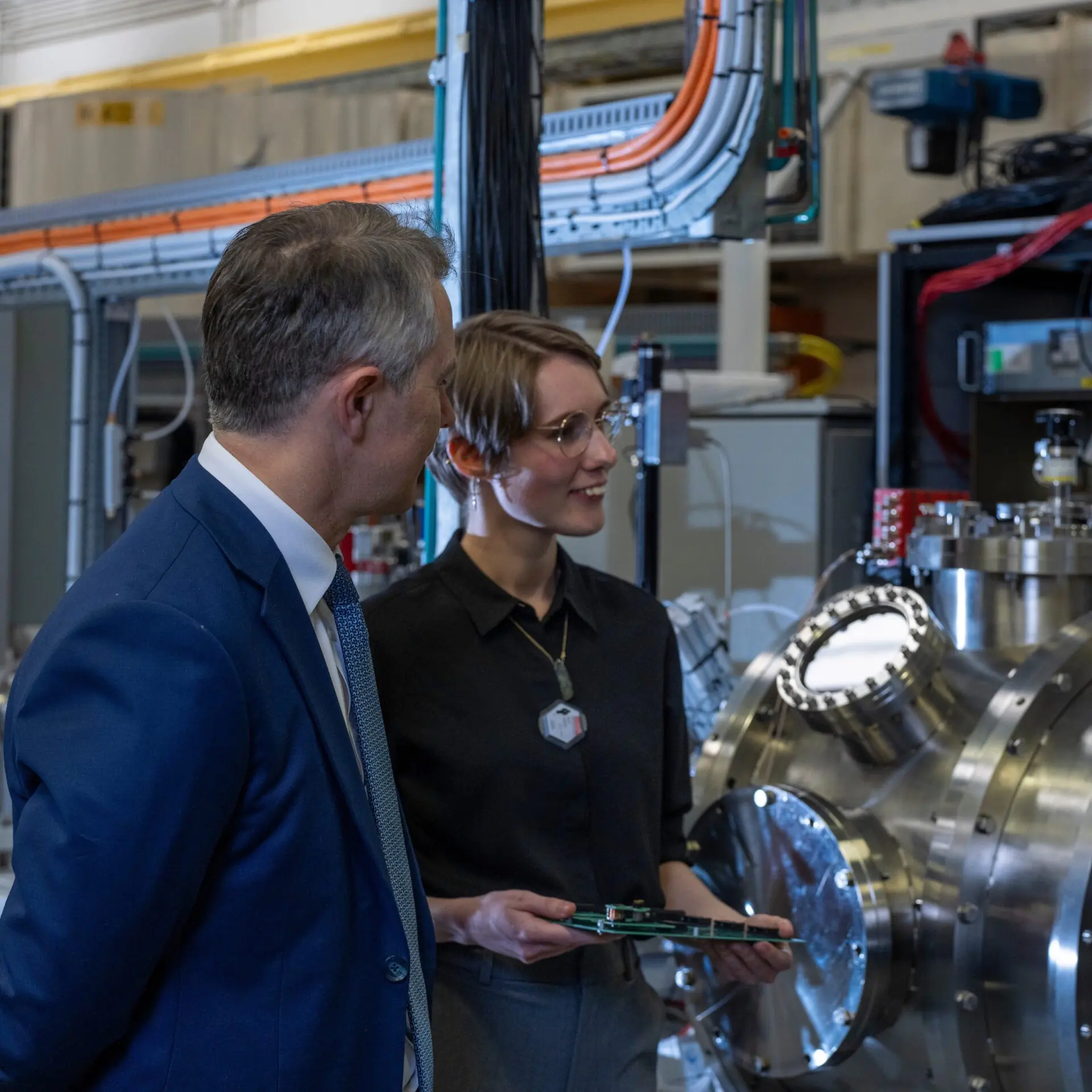
Jack and Misty’s stories highlight how NCRIS-supported infrastructure not only enables world-leading research but also helps train the highly skilled workforce needed for Australia’s economy.
We were delighted to hear the Minister praise these facilities and the global experts who, together, provide critical sovereign research infrastructure and capability.