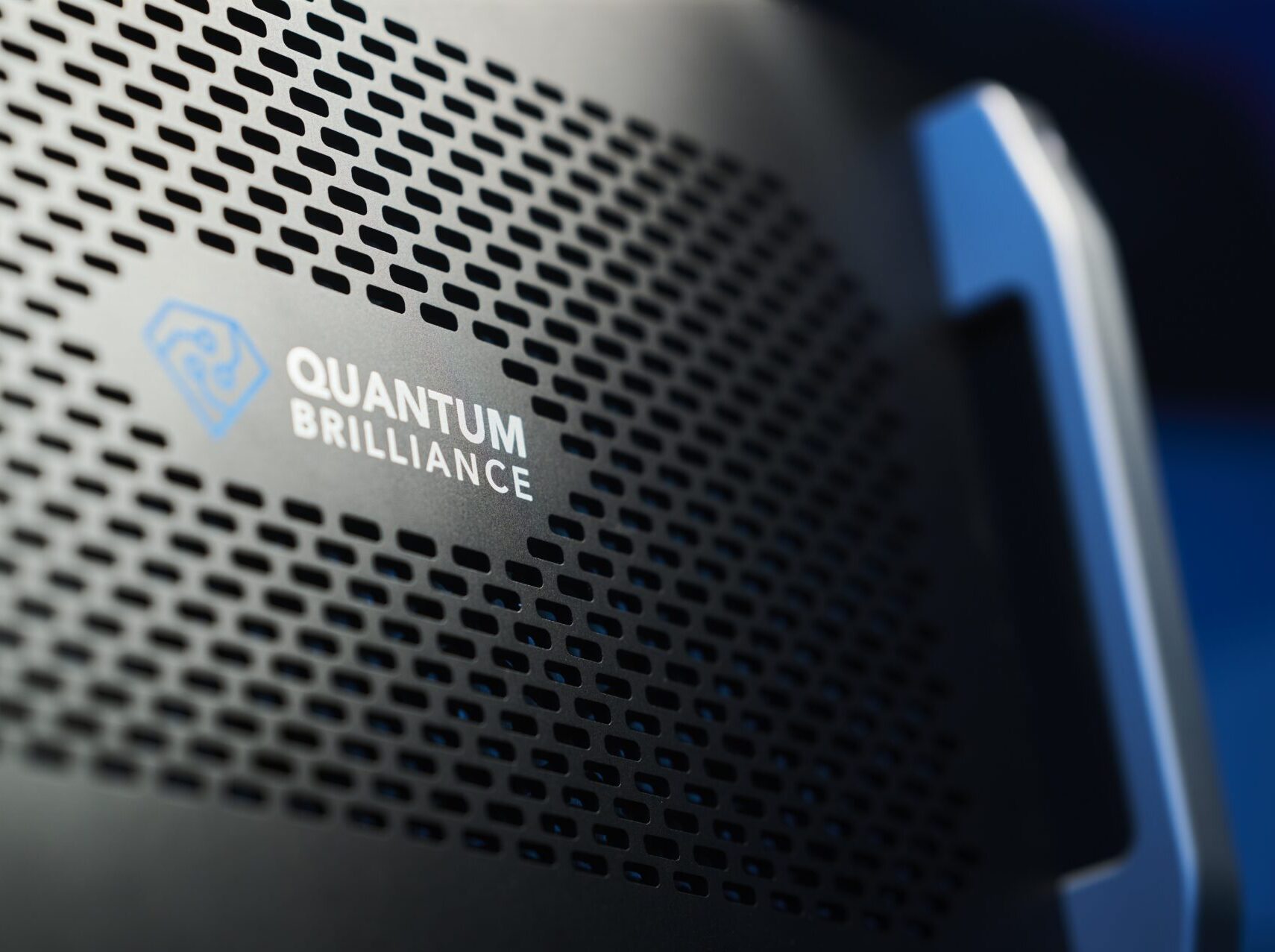
Quantum accelerators are compact modular quantum computers. “One day they will be the same size as GPU and CPU cards and will be everywhere that classical computing is, integrated into computers just like graphics cards,” says Dr Doherty, Chief Scientific Officer of Quantum Brilliance, a company spun out of ANU Research School of Physics.
Dr Marcus Doherty believes that in the future, when you shop for a new laptop, you’ll be comparing not how many CPUs and GPUs they have, but how many diamond-based quantum accelerators.
“That’s a very different vision for quantum computing compared to other companies.”
Consulting company McKinsey estimates the quantum computing industry could be worth more than $45 billion by 2040. Many large companies are already offering stand-alone cloud-based quantum computing facilities, such as Google’s Quantum AI, IBM’s Quantum Experience and Microsoft’s Azure Quantum.
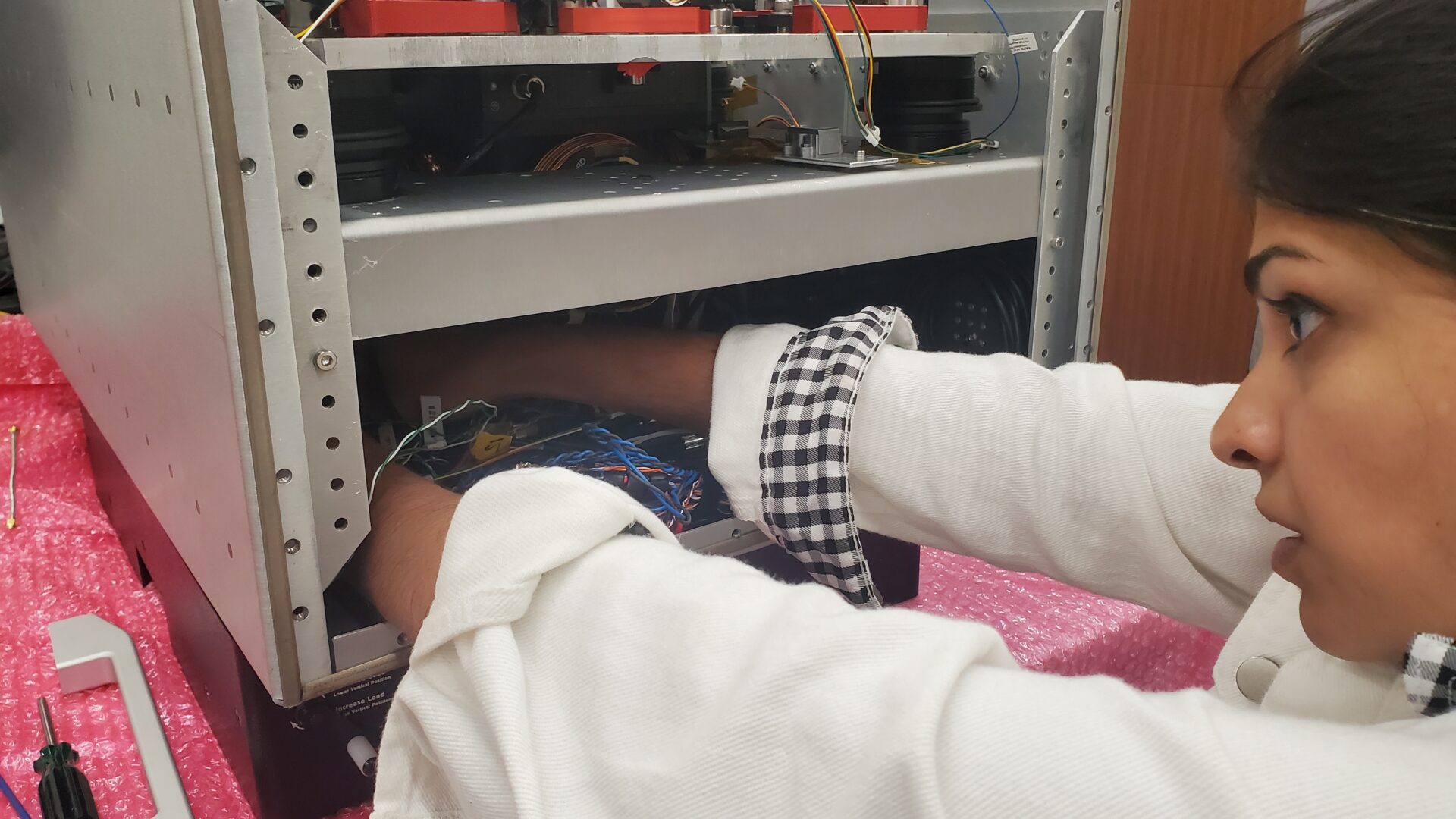
One reason these offerings are housed in centralised labs is that they are based on superconducting qubits that require cryogenic temperatures and so are encased in large chambers filled with liquid helium and liquid nitrogen.
In contrast, Quantum Brilliance’s quantum accelerators use diamonds with a small flaw in them, known as a nitrogen vacancy (NV). These are robust at room temperature, and, according to the company, can operate anywhere a classical computer can.
Physicists at ANU have been researching the quantum properties of NV centres for decades. NV centres are made up of a vacancy, a gap in the carbon atoms of the diamond lattice, next to an atom of nitrogen. Unlike carbon, which has four bonding electrons, nitrogen has a fifth one. This extra appendage is left dangling after the nitrogen bonds with the four carbons surrounding it and can be used for quantum calculations.
But the trick is to embed a nitrogen atom into a diamond, get it to sit next to a vacancy, and set this pair of flaws at the right depth so that it can be addressed (have quantum information relayed to it) and then left alone, isolated enough for the quantum calculation to take place without being swamped by noise from the world around it.
Quantum Brilliance turned to the ANU Ion Implantation Lab (to help them perfect this technique for their prototypes.
“We engaged iiLab commercially, principally because of the flexibility that ion implantation allows, to do various runs to create the NV centres we needed,” Dr Doherty says.
A prototype has now been installed at the Pawsey Supercomputing Centre in West Australia, where it is being used to develop the methods and tools to hybridise quantum computers with classical supercomputers and test them on simple calculations.
Already the hybrid system has been used to identify different features in images using Quantum Machine Learning, and to simulate simple molecules using computational chemistry.
With a successful prototype under their belt, Quantum Brilliance have moved to a different manufacturer for ongoing production.
But they are partnering with HIA for the next venture, developing a quantum diamond foundry for users of quantum diamond for a variety of technologies.
As well as computing, the robust and precise quantum properties of diamond are being leveraged in other industries: for example, globally 50 companies are working on quantum sensors and four on quantum communications.
“Across these different technologies, these customers will have different needs. Some will be best satisfied via ion implantation at HIA,” Dr Doherty says.