
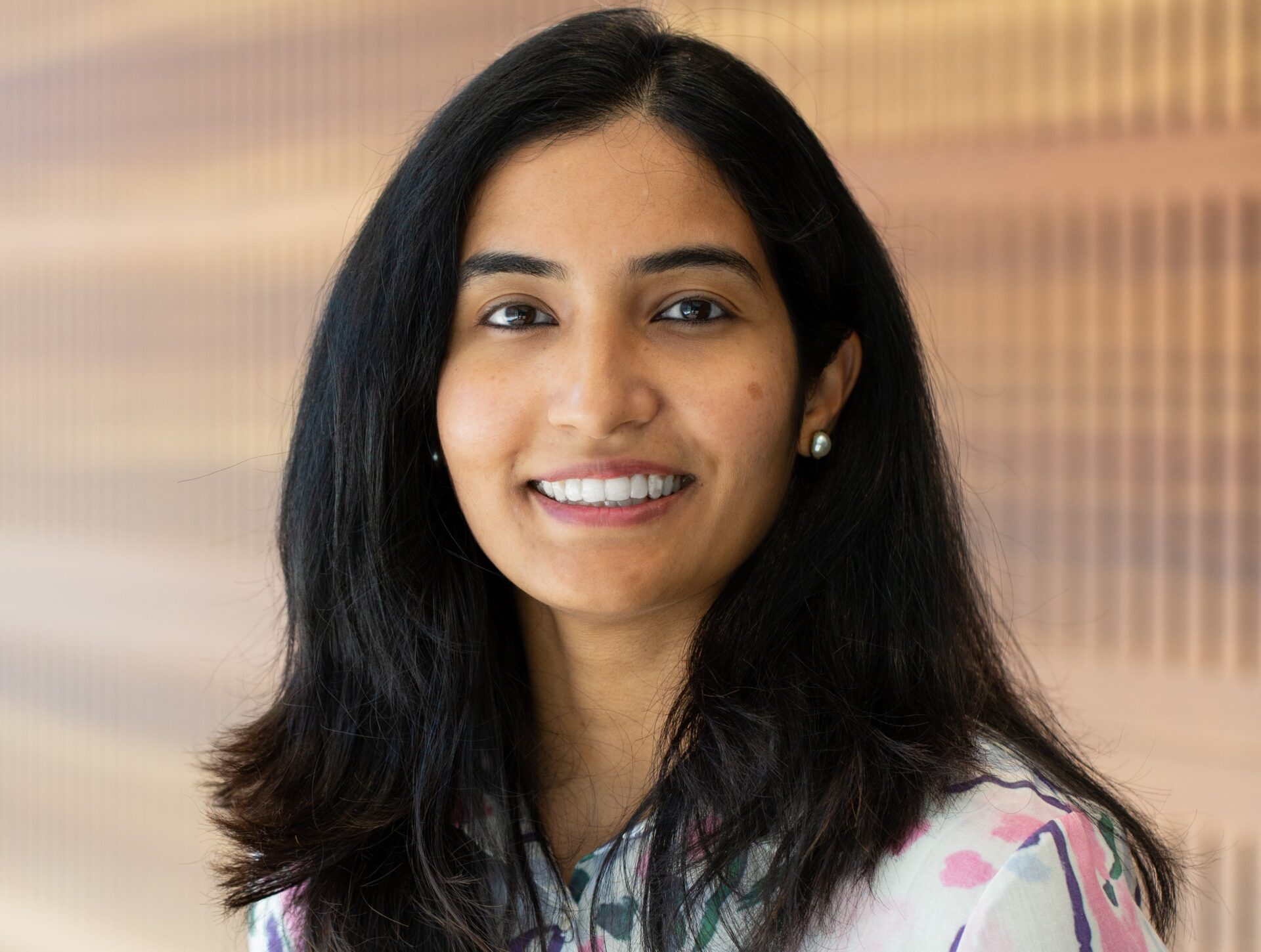
During her chemistry PhD at The Australian National University (ANU), Dr Sandra Saji worked just a short walk away from a particle accelerator. She had no idea it was there.
Now, she helps other people understand what it can do.
As Research and Industry Engagement Officer at the Heavy Ion Accelerator Facility (HIAF), located at the ANU and part of Heavy Ion Accelerators (HIA), Sandra helps researchers and businesses use the Space Irradiation Beamline (SIBL) to test how materials and electronics respond to radiation conditions they might encounter in space.
Sandra joined in January 2024, shortly after the beamline launched. After her PhD, a role combining research and industry engagement seemed “a perfect mix”.
Nuclear physics, though, was new to her. With her colleagues’ help, she spent much of her first year getting to know the accelerator, the space industry and what users needed.
Most of the beamline’s early users were from universities and research institutes. Now, more Australian businesses and international clients are requesting beamtime.
“Now, we are definitely getting some momentum, and people are getting to know about the amazing work we do,” she says.
Finding a way to make it work
A client might spend three or four days at HIAF, but Sandra’s work starts long before anyone arrives with a circuit board, materials or even seeds for irradiation.
Together with her team members Misty Lakelin and Daniel Bennett, Sandra helps establish what clients need to test and works with the technical team to prepare, from meeting specific setup requirements to helping organise Defence Export Control permits to return overseas equipment after testing.
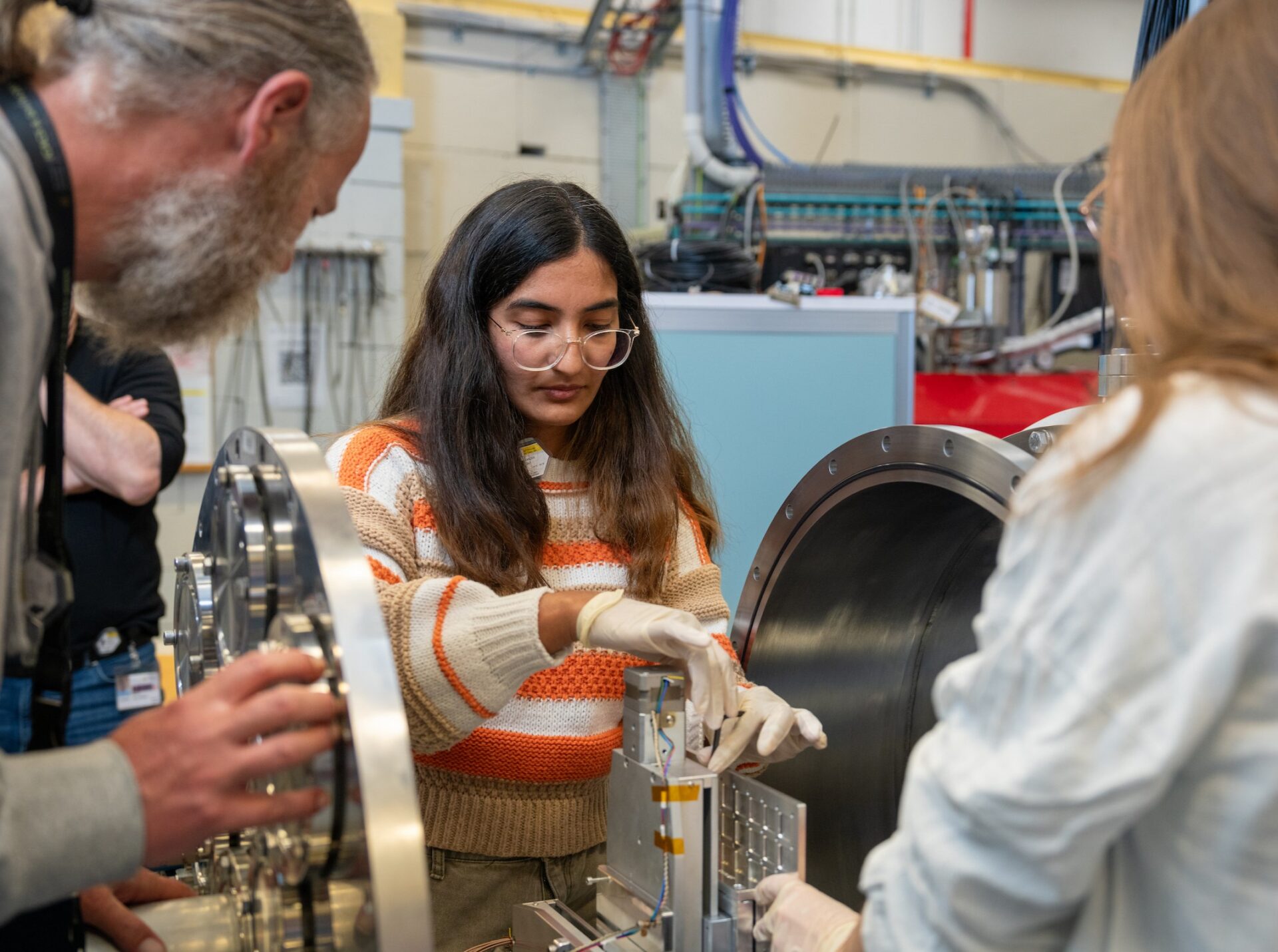
Sometimes, preparation means building something new.
With support from the Global Science and Technology Diplomacy Fund, SIBL is working with its first international client and collaborator, Singapore-based Zero-Error Systems, on a three-year program of heavy-ion testing for radiation-hardened electronics. The company needed tests at around 125°C. To make that possible, HIAF Technical Officer Daniel Bennett developed a heating plate that lets the team irradiate a board while hot – a “big win”, Sandra says.
For some users, the challenge starts before their chips even reach the beamline. Many chips need their packaging removed so the beam can reach the active circuitry layer inside. This process, called decapping, wasn’t available in-house at HIAF, or commercially elsewhere in Australia.
A conversation at a conference offered a possible solution. In Singapore, Sandra met a representative from Taiwan’s Integrated Service Technology (iST) and asked whether the company could help.
Back home, the team put the service to the test. They sent a batch of commercially available chips to Taiwan, then checked that everything was as expected when the chips returned. The successful trial gave HIAF an affordable, accessible way to organise decapping for users before radiation testing.
“It was a major bottleneck in Australia, but we were able to overcome it and find a time-efficient and cost-effective solution,” Sandra says.
Learning alongside the users
Testing living plants brings fresh new challenges: like keeping them alive inside a vacuum chamber. The team is developing a new protective sample holder to make it possible.
“The nuclear physicists in our team sometimes need to be plant biologists, or materials chemists, to understand what our clients need in terms of testing,” Sandra says.
Each project gives the team something to draw on next time and a new capability for the facility. Conversations with users also help Sandra work out what comes next for the beamline: which tests are needed, what’s already possible and where a practical change could open up new work.
She still meets people surprised to discover the accelerator exists. She knows the feeling and credits her colleagues with helping her get to know the unfamiliar science behind it.
“I feel like I’ve grown a lot over the years,” she says.
“I love working here because every day is different. We deal with so many different clients and that means I get to learn a lot of new things.”