Space Radiation Testing for Mars Society Australia’s nanorover
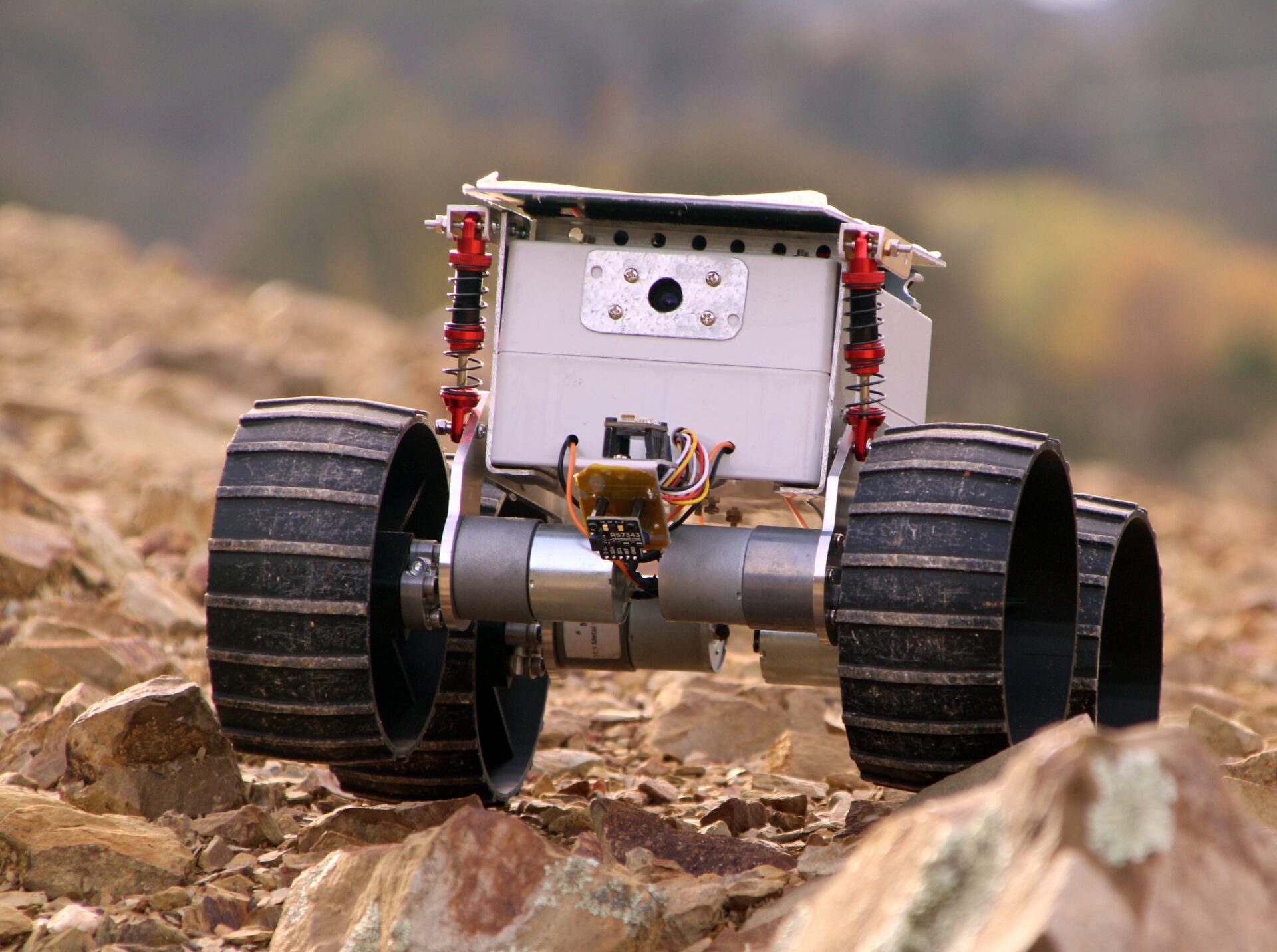
Mars nanorover BitsnBytes
The ANU Heavy Ion Accelerator Facility’s Space Irradiation Beamline (SIBL) team was delighted to host Dr Steven Hobbs and Dr Jon Clarke from Mars Society Australia Inc (MSA) for testing last month.
They exposed two Raspberry Pi camera modules to a proton beam to test their performance in Mars’ radiation environment – on the surface and in orbit. MSA are using these low-cost cameras to develop custom hyperspectral sensors for use as CubeSat payloads and in rovers. In fact, Dr Hobbs and Dr Clarke are part of a team at MSA building their own Mars nanorover, BitsnBytes. The data from this test will also be used in MSA’s outreach and education programs getting students involved in the science of space exploration.
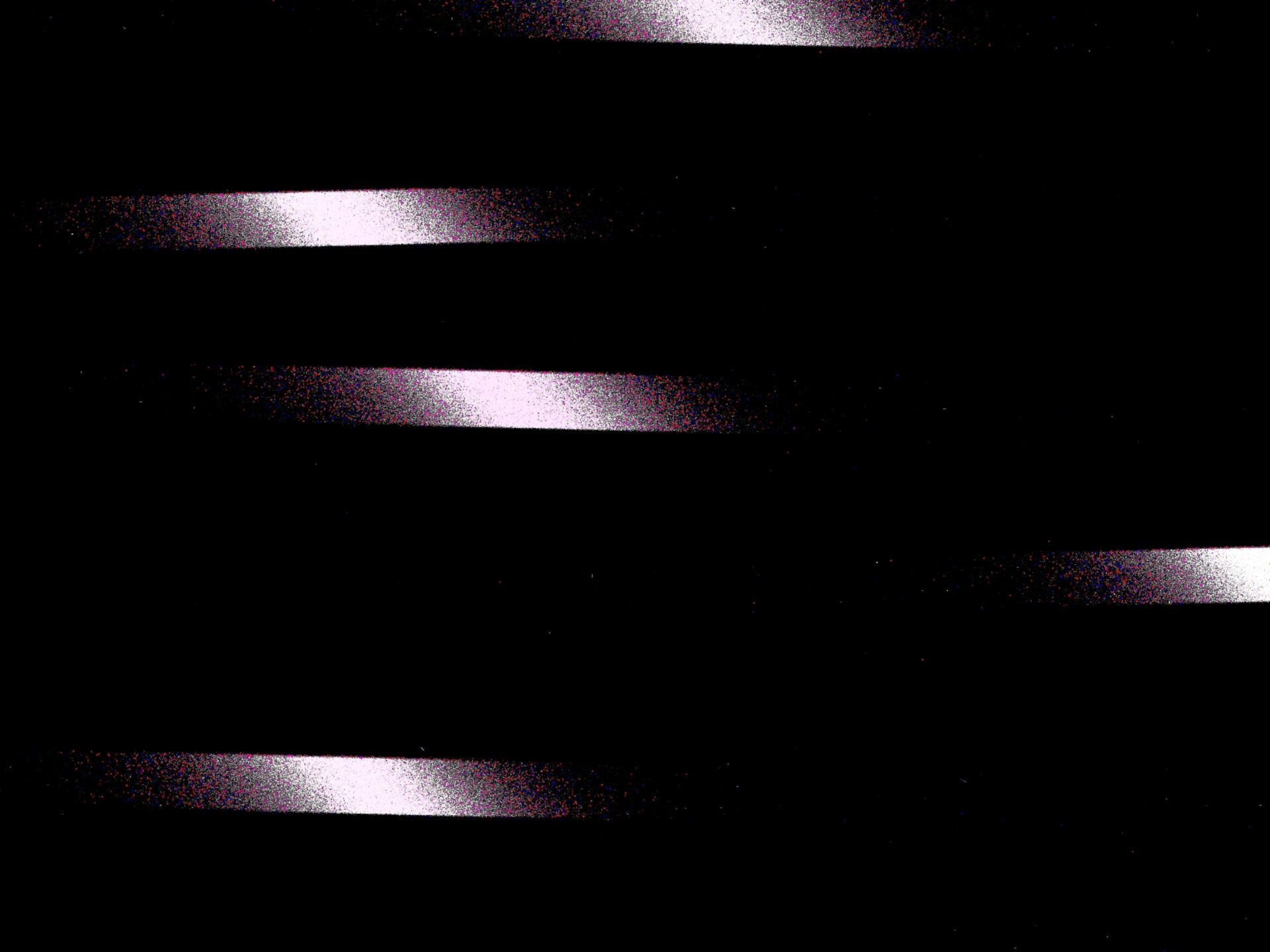
Capture of a camera exposure to the proton beam in the HIAF Space Irradiation Beamline.
The SIBL team were thrilled to be able to capture an image while a camera was exposed to the proton beam. The black image with white streaks below shows the beam captured in various stages of its scanning pattern which the SIBL beamline uses to irradiate large areas and mimic exposure to space radiation.
If you’re passionate about Mars, or all things space exploration, you can join the Mars Society of Australia at their website.